The Do Good Institute is proud to unveil the 2026 Do Good Challenge semi-finalists. These outstanding student-led teams will now compete for a spot in the Do Good Challenge Finals, where they’ll pitch their ideas before a panel of expert judges and a live audience for a chance to win a portion of the $40,000 prize pool.
The competition is divided into two distinct tracks. The Founders Track is designed for participants who started or created their organization, project, or initiative. The Leaders Track is for those serving in leadership or decision-making roles—such as directors, presidents, or managers—including individuals leading chapters, projects, or subsidiaries of larger organizations.
Fifteen teams have been chosen to move forward as semi-finalists, selected from a remarkable pool of student groups driving change across campus. Among them, four are returning Challenge participants, and six have previously taken part in the Do Good Mini-Grants program. This year’s semi-finalists are addressing a wide range of social challenges—from expanding access to healthcare and fighting food insecurity to leveraging student talent to develop impactful technology solutions.
Whether they’re first-time competitors or returning leaders building on past experience, each team in this year’s Semifinals brings a bold vision for creating meaningful change. I’m looking forward to hearing directly from the students about what drives their passion and their plans for the future.Catherine Curtis Program Coordinator
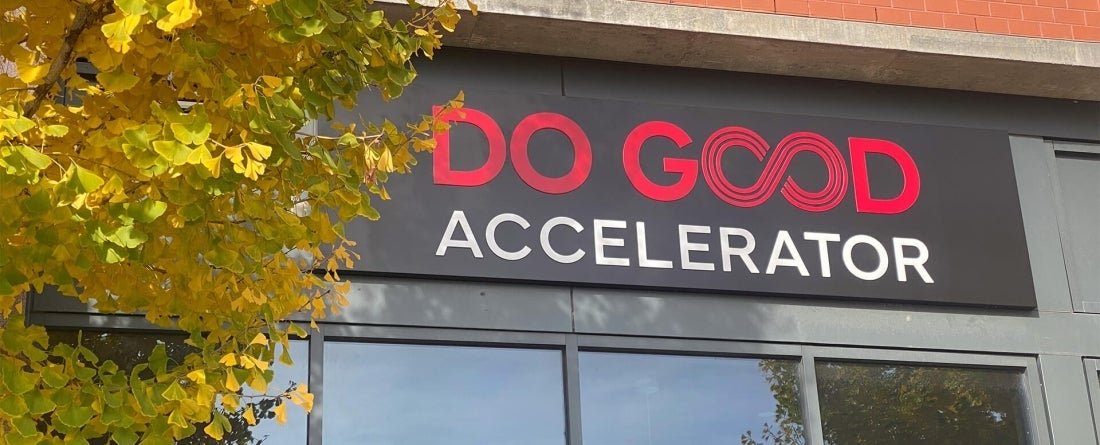
This year’s semi-finals will be taking place on Friday, March 6, at the Do Good Accelerator, with finalist teams announced on April 1. Social impact and innovation experts from across University of Maryland’s campus make up the semi-finals judge panel, including: Mira Azarm (Academy for Innovation & Entrepreneurship), Rob Cohen (Mtech Ventures), Melissa Curry (Nyumburu Cultural Center), Myles Alexander (Leadership & Community Service-Learning), Julie Randolph (Scholars - Civic Engagement for Social Good) and Alcione Frederick (Center for Community Engagement).
Founders Track
- Black People Die By Suicide Too (BPDBST) provides peer-led mental health education and suicide prevention programming for Black communities. The organization ultimately works to normalize conversations about suicide, reduce stigma, and increase access to culturally responsive support. To date, the organization has been able to fundraise over $150,000 and has already reached more than 5,000 individuals in Maryland and over 15,000 people globally through in-person programs, virtual workshops, and digital engagement.
- T-Kea Blackman ’29, College of Arts and Humanities
- Build Young Minds (BYM) equips K-12 students with engineering confidence through structured, drone-based STEM education programs. The organization delivers hands-on learning experiences that combine hardware assembly, programming, and real-world problem solving to help students think and build like engineers. Since the organization was founded, they have delivered over 1,500 hours of direct instruction, curriculum development, and hands-on engagement delivered to hundreds of students across programs. The team has also earned over $25,000 in revenue.
- Amadou Wade ’27, A. James Clark College of Engineering
- DefenX is an AI-driven software platform designed to address the growing challenge of active shooter threats in U.S. schools. Their solution combines real-time computer vision, gunshot detection, and seamless integration with existing security infrastructure to enable early threat identification and a coordinated, end-to-end response. The platform has been shaped through extensive stakeholder interviews and interdisciplinary collaboration, incorporating perspectives from students, educators, safety professionals, and technical experts to ensure the solution reflects real-world needs. The team has been awarded $250,000 to drive their launch.
- Srinidhi Gubba ’26, College of Computer, Mathematical, and Natural Sciences
- Smithi Mahendran ’27 College of Computer, Mathematical, and Natural Sciences
- Hungry 4 Change (H4C) connects individuals struggling financially to critical resources that mitigate social stressors such as food insecurity and housing instability. In the past year, Hungry 4 Change (H4C) has assisted 200 individuals and families with rent relief, food security and healthcare enrollment. H4C also empowers communities through workshops that help individuals apply for aid, understand tenant rights, and navigate financial challenges. The organization aims to serve Maryland's most at-risk communities, specifically in Montgomery County, Baltimore, Prince George's County and the District of Columbia.
- Grace Kim ’26, School of Public Policy
- Giovanni Marchand ’20, Robert H. Smith School of Business
- The Golden Wings Welfare Society is an educational and social welfare organization operating in the Bengal region and the DC metro. With an ongoing investment into kitchen gardens, they aim to provide protein rich meals to children in the Himalayan region, with little expenditure, to prevent stunting, promote cognitive growth and reduce disease. Last year alone, they were able to feed over 18,000 people and distribute an estimated 12,000 lbs of food. The organization also supports childhood education initiatives through fundraising, technology donations, and regular classes in arts, computers, dance, and English.
- Rustam Biswas ’26, Robert H. Smith School of Business
- New Generation Myanmar restores safe, high-quality education for students affected by conflict and school closures. The organization operates a fully virtual K-12 school that delivers bilingual instruction, digital literacy, and GED preparation to students across Myanmar. New Generation Myanmar currently serves over 1,500 active students, has educated more than 2,400 learners, and awarded more than 200 students educational scholarships. The school employs more than 100 educators who left the junta-led state system to uphold democratic and ethical principles - these educators have contributed more than 31,000 hours of teaching directly to students.
- Aung Khant Pyae ’26, Robert H. Smith School of Business
- David Lebedco ’26, Robert H. Smith School of Business
- Nurture Natives empower youth through native biodiversity restoration. Through hands-on lessons, school partnerships, and youth-led events, Nurture Natives has educated over 10,300 youth and reached 380,000+ community members across Maryland and the East Coast. Students have planted more than 2.4 million native seeds, grown and distributed 70,500 seedlings and 650 trees/shrubs, restored approximately 420 acres of habitat. Through community partnerships, the Nurture Natives team has also distributed over $36,000 worth of native plants and co-authored Nurture Natives: A Guide to Invasive Species and Their Native Look-Alikes.
- Esther Bonney ‘29, BSOS (former AGNR), Environmental Science & Policy
Leaders Track
- The American Diversity Group Free Clinic is a student-led, physician-supervised community health initiative providing free, comprehensive primary care services to uninsured and underinsured Maryland residents. UMD students actively conduct diagnostic screenings, serve as medical assistants and scribes, develop and present health education curriculum, and lead mental health outreach initiatives. Students have been able to serve over 3,000 patients at over 350 free clinics, providing over $500,000 in medical care.
- Yash Porwal ’26, College of Computer, Mathematical, and Natural Sciences
- Prem Saha ’25, College of Computer, Mathematical, and Natural Sciences
- Bitcamp is one of the largest collegiate hackathons on the East Coast, hosted annually at the University of Maryland. Their mission is to inspire creativity, foster collaboration, and provide hands-on learning opportunities and for over a decade, Bitcamp has been a hub for technological exploration, where students of all experience levels can build websites, apps, and hardware projects while learning from industry mentors. Since their founding, Bitcamp has raised over $1.5 million, facilitated over 1,350 student-led tech projects, and reached over 11,000 student hackers.
- Saloni Shah ’26, College of Computer, Mathematical, and Natural Sciences
- Neha Veeragandham ’26, College of Computer, Mathematical, and Natural Sciences
- Hack4Impact UMD empowers students to use technology for social good by partnering with nonprofit organizations to build free and impactful software solutions. To date, the organization has built 31 free software projects with over 100,000 student hours contributed for nonprofits addressing critical issues ranging from literacy improvement to food insecurity, with assets worth hundreds of thousands of dollars. Their projects have been able to reach over 40,000 nonprofit beneficiaries while the team has been able to raise over $60,000 to support their growth.
- Krishnan Inban Tholkappian ’26, College of Computer, Mathematical, and Natural Sciences
- Aaryan Patel ’26, College of Computer, Mathematical, and Natural Sciences
- Lean on Me UMD is a university chapter of a nonprofit that provides university students with peer emotional support via text. Since the UMD chapter was founded in 2020, it has received hundreds of conversations from fellow students on campus consisting of more than 63,000 texts exchanged in total, with each conversation lasting an average of just over an hour long. Operating 12 hours a day, 7 days a week, they maintain a median response time of just 3 to 4 minutes, an average 4.3/5 satisfaction rating, and post-conversation surveys show an average 20% reduction in immediate stress levels. The team has also raised over $10,000 to support their growth over their five year history.
- Gavin Crisologo ’26, College of Computer, Mathematical, and Natural Sciences
- Amrutha Alibilli ’26, College of Computer, Mathematical, and Natural Sciences and College of Arts and Humanities
- Remote Area Medical UMD expands access to free healthcare for underserved communities while preparing university students to serve with compassion, skill, and purpose. The organization helps students host clinics, where they support the delivery of no-cost medical, dental, and vision care to individuals facing financial, geographic, and systemic barriers to healthcare. Through participation in regional clinics, UMD RAM volunteers have supported care delivery for more than 2,000 patients and deliver medical, dental, and vision services valued in the hundreds of thousands of dollars per event.
- Malini Raghu ’26, College of Computer, Mathematical, and Natural Sciences
- Saili Khorjekar ’26, School of Public Health
- Technica Hacks was founded in 2015 as Maryland's first all-women and nonbinary hackathon. Since the founding of Technica, our team has been guided by our mission to support people of underrepresented genders through their journeys in tech and create an inclusive and supportive space for them to pursue their passions. In 2025 alone, the group supported 600 hackers who worked on over 125 projects and raised over $70,000. In addition to the hackathon, Technica has impacted and continues to serve hundreds of high school students through our fellowship program, providing early access to technical skills, mentorship, and real-world project experience.
- Claire Chen ’27, College of Computer, Mathematical, and Natural Sciences
- Meenakshi Rama Subramanian ’27, College of Computer, Mathematical, and Natural Sciences
- Terp Thon is a student-run organization at the University of Maryland that supports patients and families fighting pediatric illness and injury at Children’s National Hospital. As Maryland’s largest student-run philanthropy, Terp Thon hosts events throughout the year, culminating in a 12-hour dance marathon to celebrate their student-led impact and bring joy to the families they support. In 2025 alone, Terp Thon raised more than $240,000. Through its year-round efforts, Terp Thon has raised awareness about pediatric health issues, fostered a strong sense of community and created a platform for students to engage in philanthropy.
- Cindy Wang ’27, College of Computer, Mathematical, and Natural Sciences
- Nick Bentley ’26, College of Education
- Terrapin Think Tank (TTT) is the University of Maryland's first student-led policy incubator. TTT is composed of a six-person leadership team and a cohort of eleven undergraduate student fellows. For the past three and a half years, TTT has been developing and advocating for community-centered policy solutions to significant health challenges in Prince George's County. The incubator has produced 18 ongoing policy research projects, 36 student-led white papers, a student-initiated course, a county internship program, pilot projects in Prince George's County libraries, and a policy brief for the County Board of Health.
- Roshni Pallavajjala ’26, A. James Clark School of Engineering
- Anushka Poddar ’27, College of Computer, Mathematical, and Natural Sciences